Airlines
The hub-and-spoke model: how major airlines organise their networks
Why do so many long-haul journeys involve a connection in Paris, Amsterdam or Frankfurt? An explanation of the hub-and-spoke network, a pillar of legacy airline strategy.
By Rédaction··3 min read
The principle: everything converges on a hub
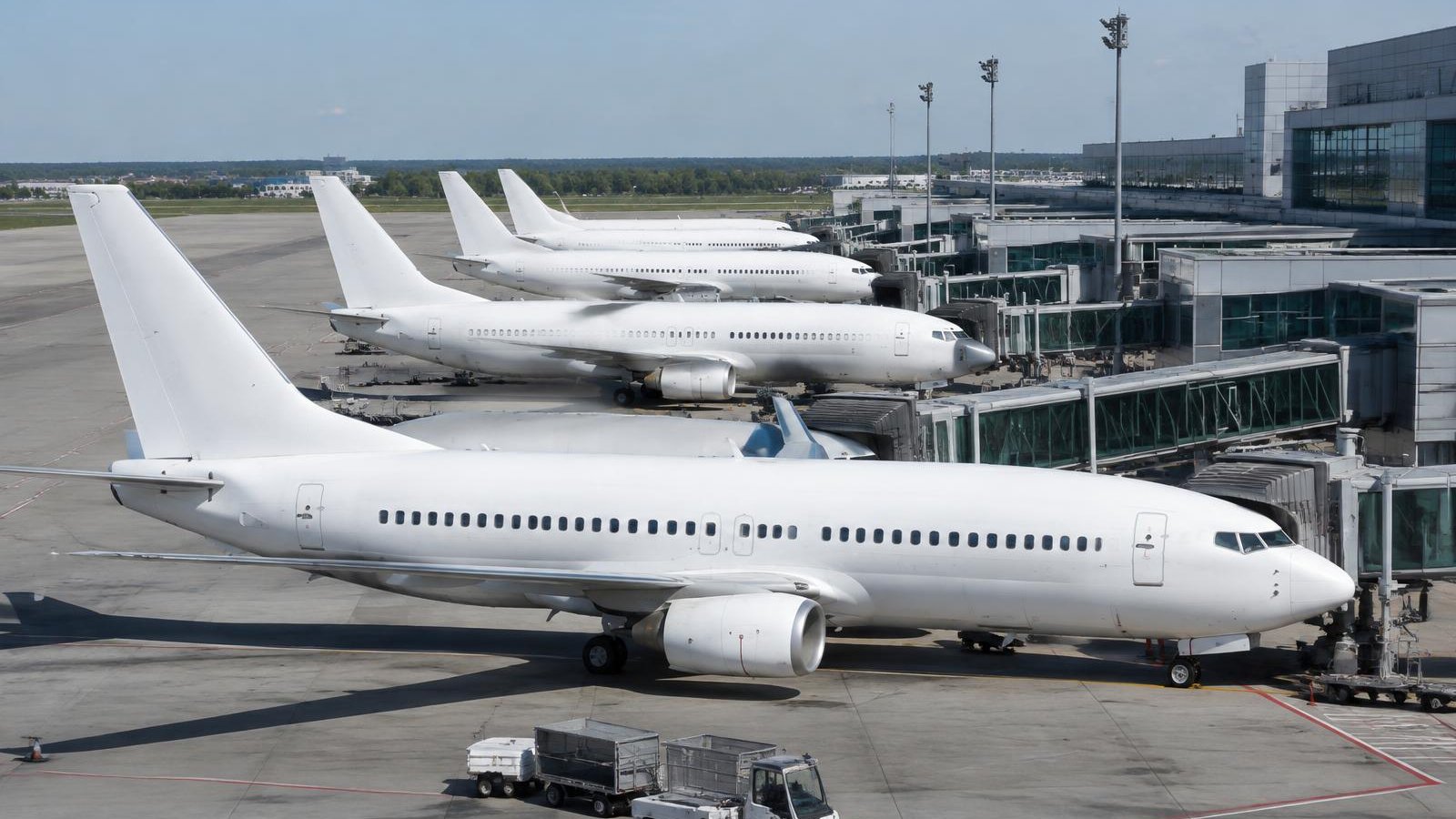
In a hub-and-spoke network, an airline concentrates its flights on a main airport, the hub, from which routes, the "spokes", radiate to many destinations. Rather than linking every pair of cities directly, it routes some of its passengers through this central point, where they change aircraft.
The benefit is mathematical. With a hub linked to 100 cities, an airline can offer thousands of origin-destination combinations, whereas it would take a huge number of direct routes to offer the same choice. Routes that would not pay with local traffic alone become viable thanks to connecting passengers.
A European example: the Air France-KLM dual hub
The Air France-KLM group is a good illustration of the model. According to the group, its network relies on two international hubs, Paris-Charles de Gaulle and Amsterdam-Schiphol. In 2025, it served more than 320 destinations in over 100 countries through Air France, KLM and Transavia.
KLM describes Schiphol as the essential hub in its network and says that almost every place in the world can be reached "from or via" Amsterdam. The Dutch airline adds that its network and Air France's are closely interwoven. In practice, a passenger departing from a regional city can reach a distant destination on a single ticket via either of the two hubs.
Connection banks
To work, a hub does more than handle a large number of flights. It must organise them over time. Airlines structure their schedules in "banks" or "waves": a series of arrivals concentrated in a short period, followed by a series of departures. Passengers can then move from one flight to the next with a reasonable connection time.
This organisation has visible consequences:
- marked peaks in activity, with terminals very busy at some times and quieter at others;
- heavy dependence on punctuality, since a delay on one inbound flight can cause several missed connections;
- substantial infrastructure needs: runways, aircraft stands and transfer baggage systems.
This is also why access to slots at the hub airport is a strategic issue for the airline based there.
The model's strengths
A hub pools traffic flows. A flight to a mid-sized city can be filled both by local passengers and by travellers coming from dozens of other origins. It also supports the use of widebody aircraft on long-haul routes, because the hub feeds these flights with passengers.
The model also relies on partnerships. KLM cites a transatlantic joint venture with Air France, Delta Air Lines and Virgin Atlantic, and another with Air France and China Eastern Airlines between Europe and China. These agreements allow schedules and capacity to be coordinated between the partners' hubs.
The limits
The hub-and-spoke network has its constraints. Connecting lengthens total journey time and adds the risk of lost baggage or a missed flight. Costs are high, because concentrating operations into narrow time windows ties up many aircraft, staff and facilities at the same time.
Other strategies have developed in response. Low-cost carriers often favour "point-to-point" flying, meaning direct routes without organised connections. And the arrival of smaller long-haul aircraft, such as long-range single-aisles, makes it possible to open direct routes between secondary cities that bypass the big hubs.
A model that remains central
Even so, the major network airlines remain committed to their hubs, which are often their main competitive asset. The quality of a hub, measured by the number of possible connections, the reliability of transfer times and the ease of transit for travellers, remains a decisive factor in the competition between European, Gulf and Asian airlines.
Sources
Related
Airlines
Aircraft leasing: understanding dry leases and wet leases
Many airliners do not belong to the airlines that fly them. Dry lease, wet lease, ACMI: the mechanisms and the rules that govern them.
13 October 2026
Airlines
Star Alliance, SkyTeam, oneworld: what are airline alliances for?
Since the late 1990s, three major alliances have shaped cooperation between network airlines. What they offer passengers and airlines, and what they do not do.
18 September 2026
Airlines
The low-cost model: how budget airlines transformed air transport
A single fleet type, fast turnarounds, direct sales and paid extras: the low-cost model rests on strict cost discipline. Its principles, its weight and how it is changing.
5 September 2026