Manufacturers
Airbus A350: the composite long-haul jet explained
In service since 2015, the A350 is Airbus's latest-generation widebody. Composite materials, a dedicated engine and two fuselage lengths: the technical choices that define the programme.
By Rédaction··3 min read
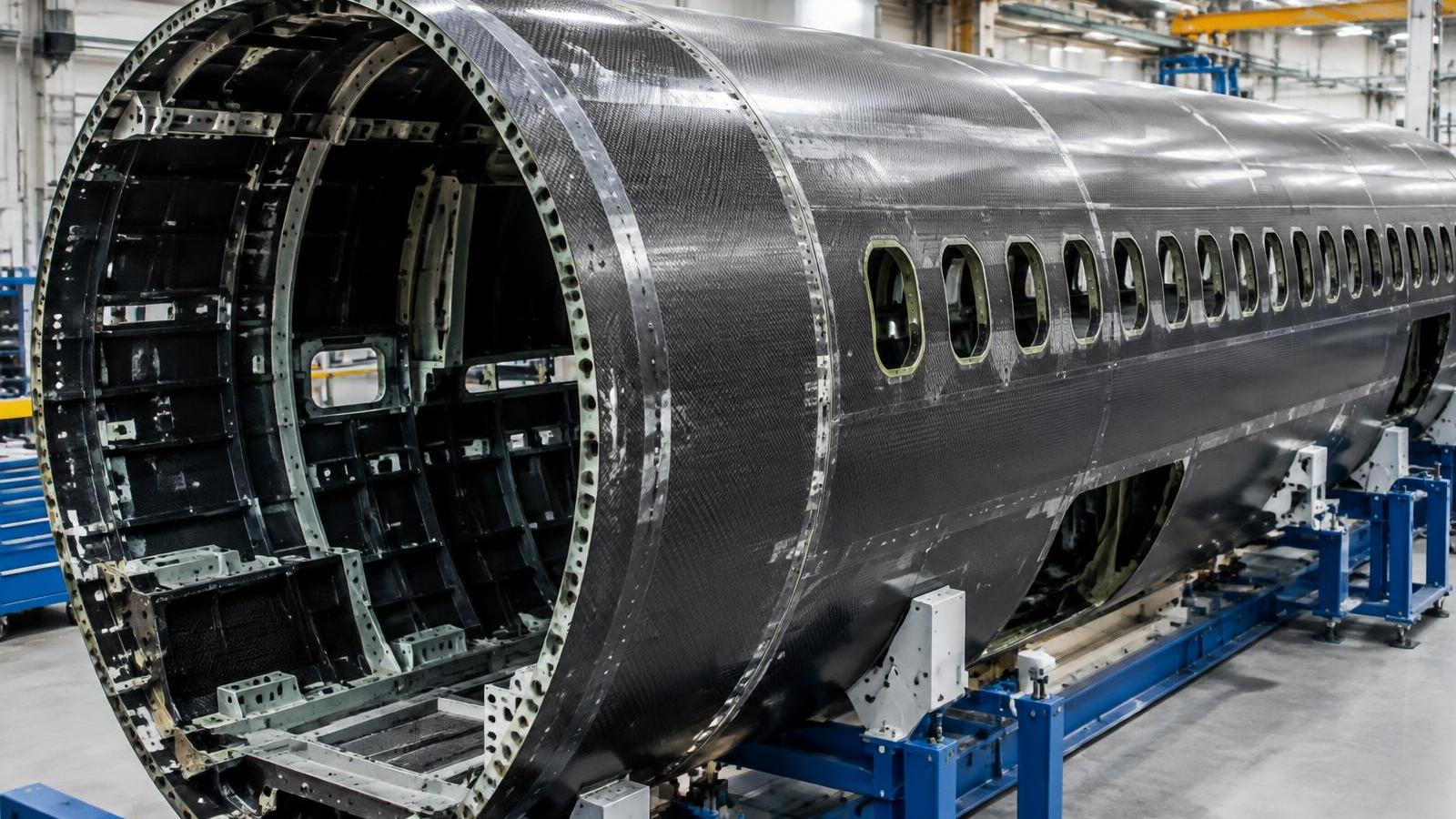
Airbus's answer to modern long-haul
Within the Airbus range, the A350 occupies the medium-to-large long-haul widebody segment. It was designed to succeed earlier generations of long-haul twinjets and four-engine aircraft, with a clearly stated objective: to cut fuel burn per seat. Airbus claims around 25% lower fuel burn and CO₂ emissions compared with previous-generation aircraft.
The first aircraft, an A350-900, entered service in January 2015 with Qatar Airways, according to the manufacturer. The stretched A350-1000 followed in 2018.
An airframe made mostly of advanced materials
The A350's most striking feature is its structure. According to Airbus, more than 70% of the airframe is made of advanced materials, with carbon fibre reinforced polymer alone accounting for 53% of the structure, used for the fuselage, wings and tail.
This choice serves several purposes:
- reducing weight, which cuts fuel burn;
- limiting corrosion and fatigue, which can lengthen the interval between some structural maintenance tasks;
- allowing cabin pressure and humidity that are better for comfort, since composites are less sensitive to these constraints than aluminium.
The shift also has consequences for maintenance: inspecting and repairing composite structures requires specific skills, tooling and procedures, which are now part of technician training.
Two passenger versions and a freighter
Airbus offers the A350 in two lengths for passenger service:
- A350-900: 300 to 350 seats in a typical three-class layout, with an announced range of 8,600 nautical miles;
- A350-1000: 350 to 410 seats in a typical layout, depending on the configuration chosen.
Both versions share a common pilot type rating, allowing an airline to fly both lengths with the same crews. The manufacturer is also developing a freighter version, the A350F, for the long-haul cargo market.
A single engine: the Trent XWB
The A350 is powered by the Rolls-Royce Trent XWB. The A350-900 uses the XWB-84 version, rated at around 84,000 pounds of thrust, and the A350-1000 the XWB-97, at around 97,000 pounds, the most powerful in the Trent family according to the engine maker. Rolls-Royce states that the XWB-84 entered service in 2015 and the XWB-97 in 2018.
Offering a single engine simplifies the product for airlines and the manufacturer, but ties the programme to one propulsion supplier, an increasingly common choice on recent widebodies.
The twinjet, the new long-haul standard
The A350 also illustrates a long-term trend: twinjets replacing four-engine aircraft on long-haul routes. Two high-thrust engines burn less fuel and cost less to maintain than four smaller ones. Improvements in engine reliability have allowed twinjets to be authorised to fly further from a diversion airport, opening up oceanic and polar routes to them. According to Airbus, the A350-1000 can seat up to 480 passengers in high-density layouts, a capacity that brings it close to some four-engine aircraft.
Where does the programme stand?
According to figures published on the Airbus website, the A350 has logged more than 1,500 orders, more than 700 deliveries and 41 operators worldwide. These volumes make it one of the main widebodies in production, competing directly with the Boeing 787 and, at the upper end, with the 777.
For airlines, the A350 serves both to renew older fleets and to open ultra-long-haul routes. The choice between the two lengths depends on expected traffic, distance and network strategy: a busy route between two hubs is not planned in the same way as a thinner long-haul service.
Sources
Related
Manufacturers
Airbus A220: from Bombardier's C Series to the Airbus range
Designed in Quebec by Bombardier, the aircraft joined the Airbus range in 2018 as the A220. It covers the 100-to-160-seat segment, between regional aircraft and the A320 family.
26 October 2026
Manufacturers
ATR 42 and ATR 72: the regional turboprops designed in Toulouse
A joint venture between Airbus and Leonardo, ATR has established itself in the market for propeller-driven regional aircraft. Why the turboprop still makes sense on short routes, and how the ATR 42 and ATR 72 differ.
19 October 2026
Manufacturers
The A320neo family: how Airbus renewed its single-aisle best-seller
From the A319neo to the A321XLR, the A320neo family offers one airframe in several lengths and ranges. A look at the logic of a programme that has become the backbone of short and medium-haul flying.
16 October 2026