Innovation
Hydrogen aircraft: what Airbus's switch to fuel cells changes
In 2025, Airbus revised its ZEROe roadmap and chose a fully electric aircraft concept powered by fuel cells. Why hydrogen is attractive, and why it remains so hard to carry on board.
By Rédaction··3 min read
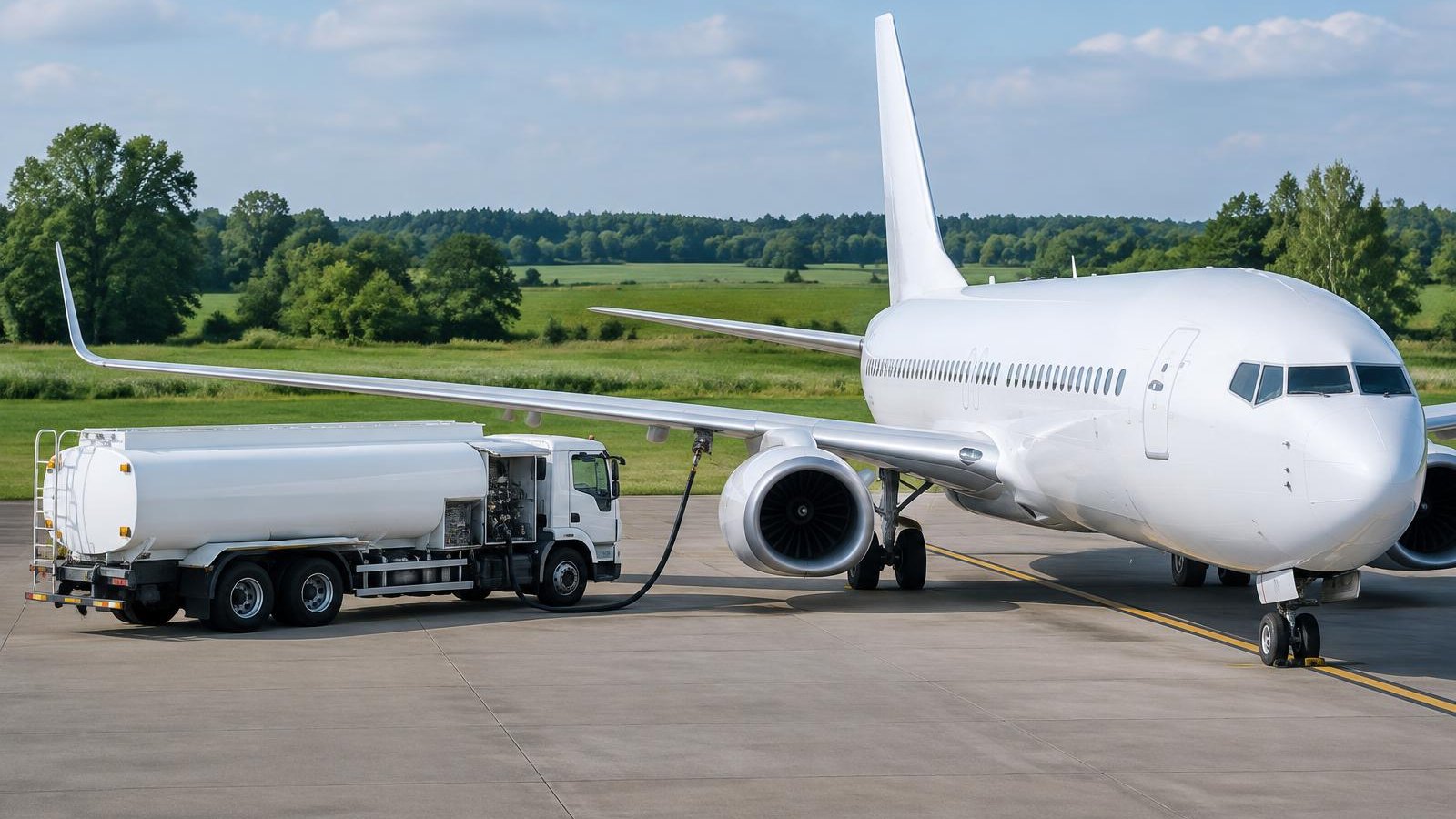
Hydrogen is often presented as one of the possible fuels for aviation without CO2 emissions. Airbus made it the focus of its ZEROe programme, launched in 2020. At its Airbus Summit on 25 March 2025, the manufacturer set out the direction it has chosen and reaffirmed its commitment, while acknowledging that scaling up depends on conditions it does not control alone.
Two ways to use hydrogen
Hydrogen contains no carbon: turning it into energy on board produces no CO2. It can be used in two ways:
- burned in a gas turbine, like kerosene, in an adapted engine;
- converted into electricity by a fuel cell, which combines hydrogen with oxygen from the air to produce current, heat and water; that electricity then drives electric motors turning propellers.
After studying several concepts over five years, Airbus said in 2025 that it favours the second route.
The concept chosen by Airbus
The concept presented in 2025 is an aircraft with four 2-megawatt electric engines. Each engine is powered by its own fuel cell system, and two liquid hydrogen tanks supply the whole installation. Airbus is building on several milestones already passed:
- in 2023, the demonstration of a 1.2 MW hydrogen propulsion system;
- in 2024, end-to-end tests combining a fuel cell stack, electric motors, gearboxes, inverters and heat exchangers;
- the development, with Air Liquide Advanced Technologies in Grenoble, of a demonstrator for the liquid hydrogen system.
Integrated ground tests of the propulsion and hydrogen distribution are planned for 2027 in Munich. The press release gives no entry-into-service date for a hydrogen aircraft; it states that the next-generation single-aisle aircraft, which could arrive in the second half of the 2030s, will not itself be hydrogen-powered.
The real challenge: storage
Hydrogen packs a lot of energy per kilogram: roughly two and a half to three times as much as kerosene depending on the source (IATA uses 2.5 times, Airbus "approximately three times"). But it is extremely light for its volume. Airbus gives telling orders of magnitude: at ambient pressure and temperature, about 3,000 litres of gaseous hydrogen would be needed to match the energy in one litre of kerosene; at 700 bar, about six litres; in liquid form, about four litres.
Hence the choice of liquid hydrogen, which must be kept at around -253 °C. The tanks under consideration have a double wall with a vacuum between the two, plus multi-layer insulation, and must withstand some 20,000 take-offs and landings. They are bulky and cannot be housed in the wings like kerosene: the aircraft's architecture has to be rethought.
Emissions, safety and the wider ecosystem
The climate balance is not zero, however. IATA points out that burning hydrogen produces about 2.6 times more water vapour than kerosene, but no CO2 or particles, and up to 90% less nitrogen oxides; a fuel cell emits only water. Hydrogen also has to be produced: by electrolysis of water using low-carbon electricity, or from natural gas, which emits CO2. Its climate benefit therefore depends on how it is produced.
The association also highlights specific safety issues (a wide flammability range, an invisible flame, leaks that are hard to detect) and regards certification as the biggest challenge. Airbus, for its part, stresses the need to build a hydrogen economy at airports and a suitable regulatory framework.
Key points
- In 2025 Airbus chose a fuel cell concept with four 2 MW electric engines.
- Liquid hydrogen must be stored at around -253 °C and takes up about four times the volume of kerosene.
- No entry-into-service date has been set; integrated ground tests are planned for 2027.
- The climate benefit depends on low-carbon hydrogen production and on infrastructure.
Sources
Related
Innovation
Sustainable aviation fuels: the timeline set by ReFuelEU Aviation
The EU's ReFuelEU Aviation regulation requires fuel suppliers to provide a growing minimum share of sustainable fuel at EU airports, from 2% in 2025 to 70% in 2050.
24 October 2026
Innovation
Electric aircraft: why batteries still limit flight
The first certified fully electric aeroplane has been flying since 2020, but it carries two people for less than an hour. The explanation comes down to one figure: the energy stored per kilogram of battery.
23 September 2026
Innovation
CFM RISE: where does the open fan engine stand?
With its RISE programme, CFM International is targeting fuel burn more than 20% lower than today's engines thanks to an open fan. A progress report on an architecture that breaks with forty years of nacelles.
12 September 2026