Innovation
Sustainable aviation fuels: the timeline set by ReFuelEU Aviation
The EU's ReFuelEU Aviation regulation requires fuel suppliers to provide a growing minimum share of sustainable fuel at EU airports, from 2% in 2025 to 70% in 2050.
By Rédaction··1 min read
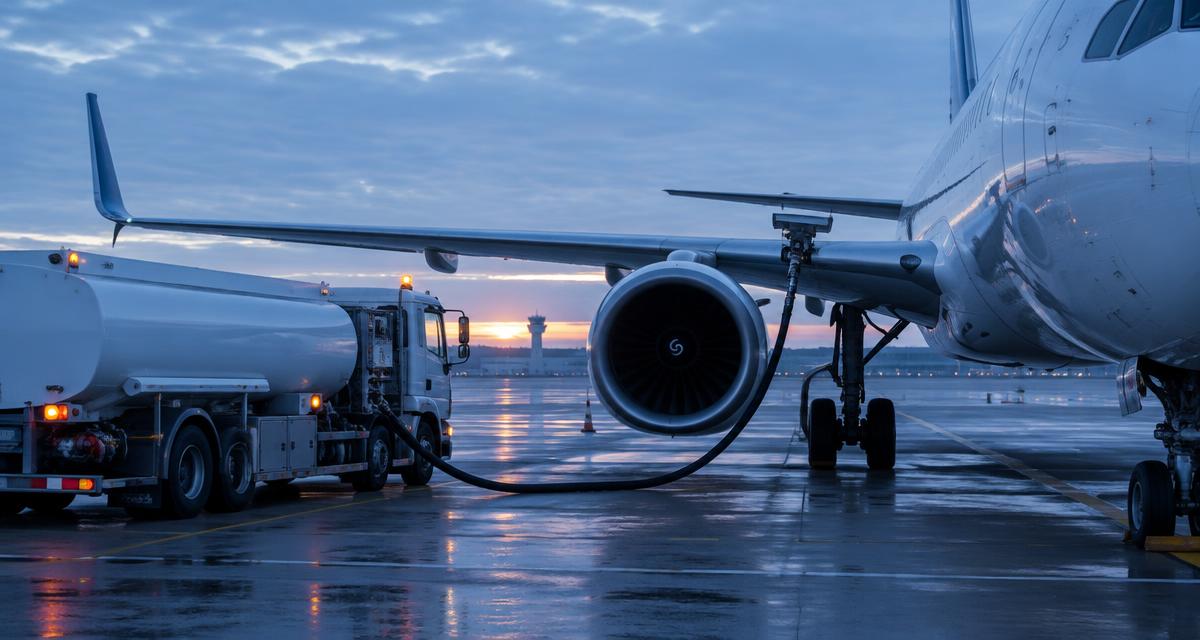
A gradual blending mandate
Adopted in 2023, Regulation (EU) 2023/2405, known as ReFuelEU Aviation, sets a minimum share of sustainable aviation fuel (SAF) in the jet fuel supplied at European Union airports:
| Year | Minimum SAF share | of which synthetic fuels |
|---|---|---|
| 2025 | 2% | — |
| 2030 | 6% | 1.2% |
| 2035 | 20% | 5% |
| 2040 | 34% | 10% |
| 2045 | 42% | 15% |
| 2050 | 70% | 35% |
What counts as sustainable fuel?
The regulation covers in particular advanced biofuels made from waste and residues, and synthetic fuels (e-kerosene) produced from low-carbon hydrogen and captured CO₂. Food and feed crops are excluded.
Preventing "tankering"
Aircraft operators must also uplift at EU airports at least 90% of the fuel needed for their flights departing from those airports. The aim is to stop airlines carrying extra fuel to avoid the obligations, which would increase emissions.
Key takeaways
- The SAF share obligation applies to fuel suppliers.
- The trajectory runs from 2% in 2025 to 70% in 2050.
- A specific sub-target for synthetic fuels starts in 2030.
Sources
Related
Careers and training
Part-66 licence: how do you become an aircraft maintenance technician?
In Europe, certifying an aircraft's release to service after maintenance requires a Part-66 licence issued under EASA rules. Categories, training and experience explained.
27 October 2026
How it works
How an airplane flies: the four forces, simply explained
Lift, weight, thrust and drag: four forces are enough to describe how an aircraft flies. An explanation without unnecessary equations.
20 October 2026