Defence
A330 MRTT Phénix: a tanker that doubles as a transport aircraft
Derived from an airliner, the A330 MRTT refuels combat aircraft in flight, carries troops and can become a flying hospital. In France it is called Phénix; in Europe it also equips a pooled multinational fleet.
By Rédaction··3 min read
A converted airliner
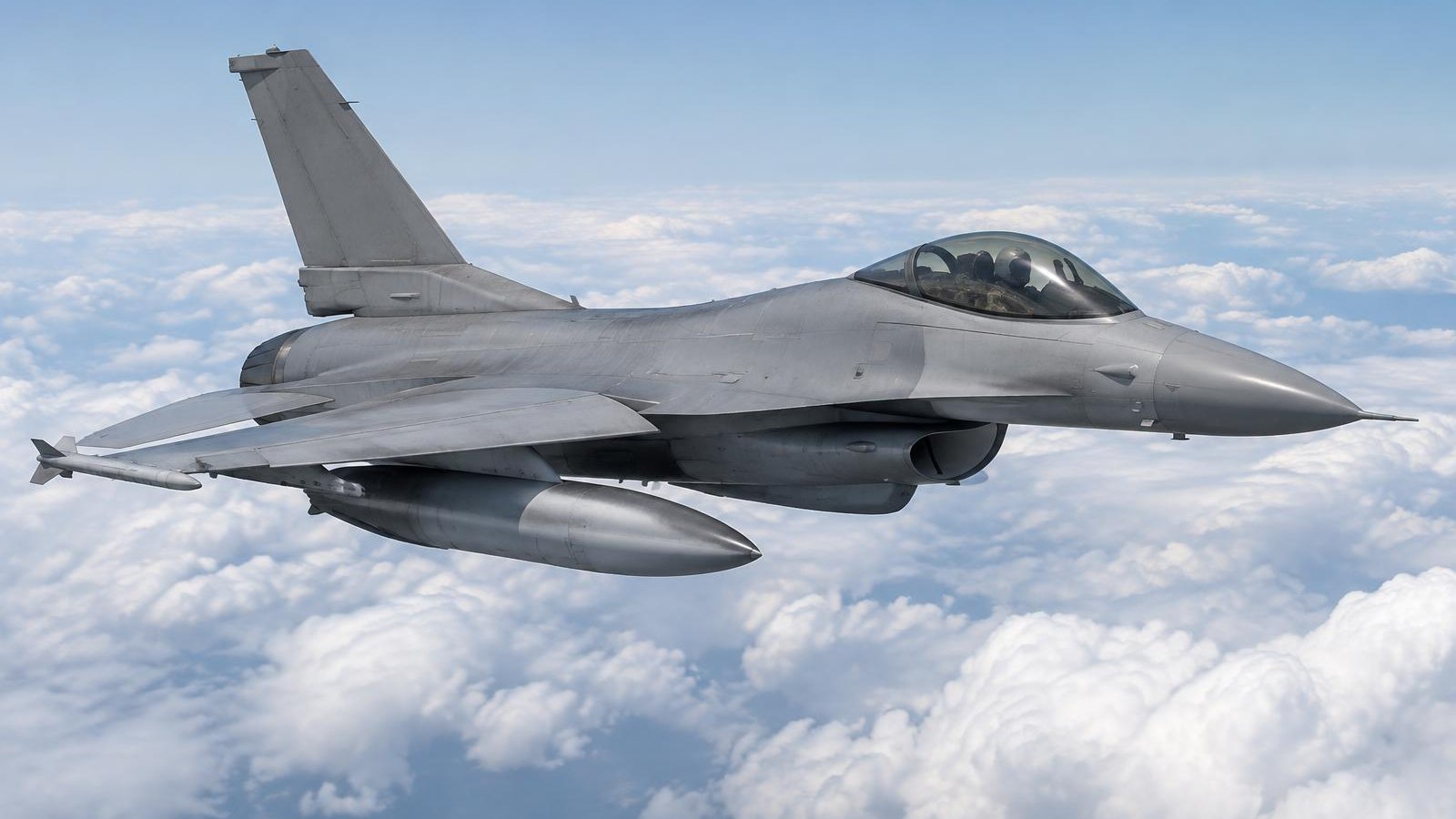
The MRTT, short for Multi Role Tanker Transport, is a military version of the Airbus A330, a long-haul twinjet widely used by airlines. Airbus modifies it so that it can transfer part of its fuel to other aircraft in flight, while keeping the ability to carry passengers and cargo. This dual function explains the name: a single aircraft carries out missions that previously required several types.
The Phénix in the French forces
In France the A330 MRTT has been named Phénix. The order was announced in December 2014 for an initial batch of twelve aircraft, with the target later raised to fifteen. France's 2019–2025 military programming law accelerated deliveries. The first Phénix was accepted in September 2018 at Istres Air Base 125, in the Bouches-du-Rhône department, which is home to the fleet.
According to the French Ministry of the Armed Forces, the Phénix is gradually replacing several older fleets: the 14 KC-135 and C-135 tankers, some of which were approaching sixty years in service, and the 5 A310 and A340 strategic transport aircraft. This rationalisation reduces the number of aircraft types to maintain and modernises two capabilities at once.
What the aircraft can do
The ministry's fact sheet gives several orders of magnitude:
- 110 tonnes of fuel carried;
- three refuelling points, allowing in particular two Rafales to be refuelled at the same time;
- transport of up to 272 people or 30 tonnes of cargo over 10,000 km;
- in medical configuration, evacuation of up to 10 seriously ill or 40 less dependent patients over 12,000 km;
- a speed of Mach 0.86, a length of 58.8 m and a wingspan of 60.3 m;
- a take-off mass of 233 tonnes.
The ministry also stresses the aircraft's ability to deploy forces anywhere in the world in under 48 hours.
Two ways to refuel in flight
There are two main methods of air-to-air refuelling. With the flying boom, an operator on board the tanker steers a telescopic tube towards a receptacle on the receiving aircraft. With the hose and drogue system, the tanker trails a flexible hose ending in a basket, into which the pilot of the receiving aircraft inserts a probe. The MRTT can be fitted with both systems, so it can serve aircraft designed for either method.
A role in deterrence and air defence
Air-to-air refuelling holds a special place in French doctrine. It extends the duration and range of combat aircraft missions, which is essential for distant operations. The Phénix thus supports the airborne component of nuclear deterrence, the permanent air security posture over national territory and the deployment of forces on overseas operations.
A multinational fleet in Europe
The A330 MRTT is also at the heart of an unusual European arrangement: the Multinational MRTT Fleet (MMF). Under this model the aircraft are owned by NATO, and the participating countries share their use according to their needs. Acquisition was handled by OCCAR on behalf of the NATO Support and Procurement Agency (NSPA), which then manages the fleet throughout its life cycle.
In 2021 OCCAR listed six participating countries, Belgium, the Czech Republic, Germany, Luxembourg, the Netherlands and Norway, and a planned fleet of nine aircraft. The aircraft are operated by a multinational unit from Eindhoven in the Netherlands and Cologne in Germany. This pooling model gives medium-sized countries access to an expensive capability they would struggle to fund alone.
Key points
With the MRTT, the same civil airframe serves as a tanker, a transport aircraft and an air ambulance. In France the Phénix has replaced ageing fleets; in Europe it has made a shared fleet possible, a concrete example of cooperation in air support.
Sources
Related
Defence
Rafale: the history and principles of an "omnirole" combat aircraft
Designed in the 1980s to replace several aircraft types at once, the Rafale equips the French Air and Space Force and the French Navy. A look at a programme that evolves through successive "standards".
14 October 2026
Defence
A400M Atlas: Europe's military transport aircraft explained
Able to fly between continents and then land on a rough strip, the A400M Atlas has become a central tool of European military airlift. Its characteristics, missions and multinational organisation.
3 October 2026
Defence
FCAS: understanding Europe's Future Combat Air System
Launched in 2017 by France and Germany and joined by Spain, FCAS (SCAF in French) is not just about designing a new fighter. It is a "system of systems" expected around 2040.
17 September 2026