Defence
Rafale: the history and principles of an "omnirole" combat aircraft
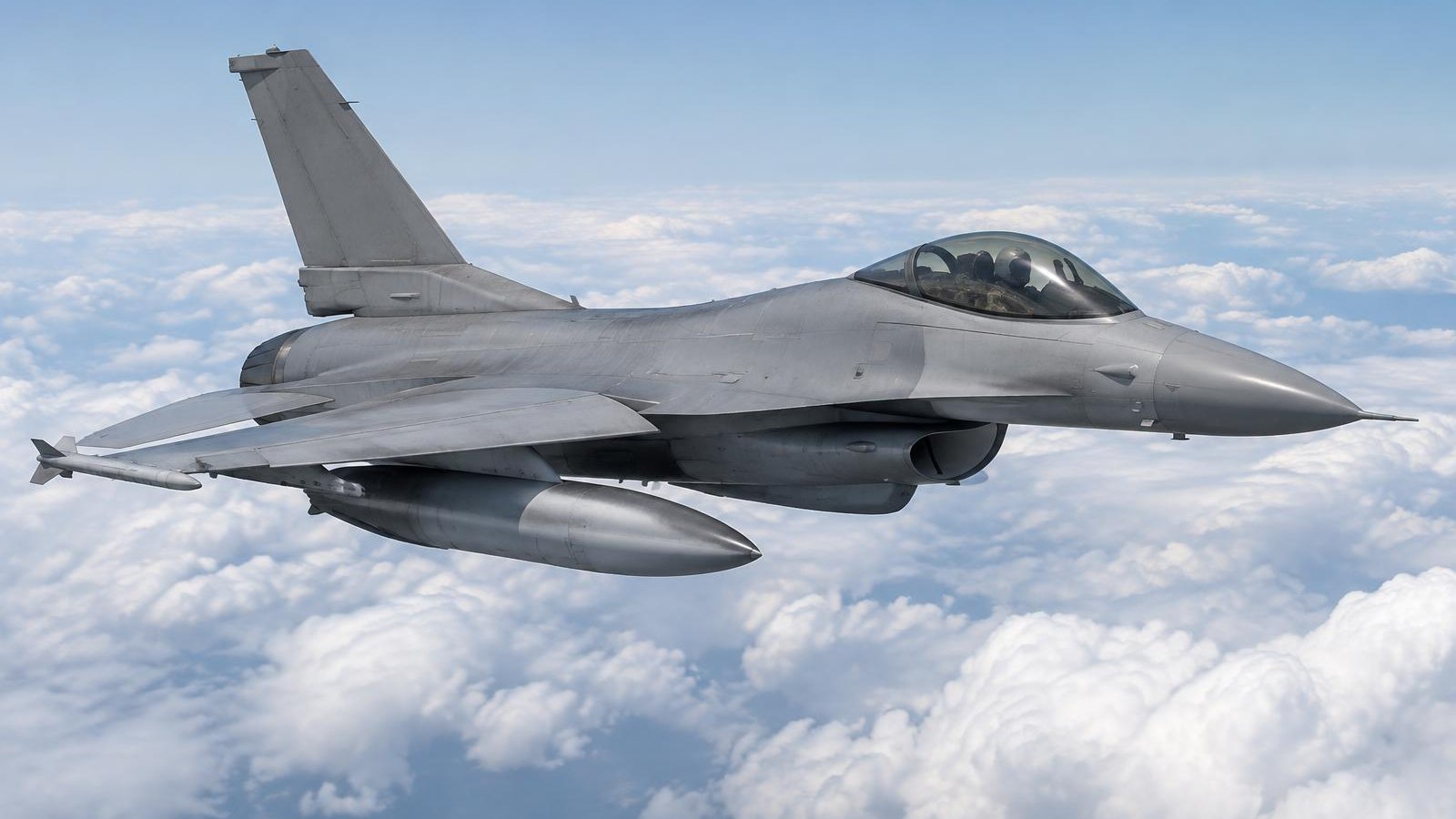
Designed in the 1980s to replace several aircraft types at once, the Rafale equips the French Air and Space Force and the French Navy. A look at a programme that evolves through successive "standards".
By Rédaction··3 min read
A programme born of a national choice
The Rafale story begins in the early 1980s. In 1983 France launched the ACX programme, a demonstrator intended to pave the way for the next French combat aircraft. Two years later, in 1985, Paris withdrew from the European fighter project that would become the Eurofighter, in order to develop an aircraft meeting its own needs, notably the ability to operate from an aircraft carrier.
The Rafale A demonstrator made its first flight in July 1986, around three and a half years after the programme began. Some fifteen years of development followed before the first production aircraft were delivered: the French Navy received its first operational Rafales in the early 2000s, and the Air Force in 2006.
A family of three versions
The Rafale comes in three versions that share most of their design:
- the Rafale C, a single-seater for the French Air and Space Force;
- the Rafale B, a two-seater, also flown by the French Air and Space Force;
- the Rafale M, a single-seat carrier-borne version, strengthened and equipped for catapult launches and arrested landings on the aircraft carrier Charles de Gaulle.
All are powered by two Safran M88 engines and designed by Dassault Aviation, with Thales providing much of the onboard electronics.
What does "omnirole" mean?
The term sums up the programme's philosophy. Rather than maintaining several specialised aircraft types, France chose a single aircraft able to carry out the full range of combat aviation missions: air defence, close support of ground forces, deep strike, reconnaissance, anti-ship operations and participation in the airborne component of nuclear deterrence.
The idea goes beyond simple versatility. A former Dassault Aviation engineer, quoted at a conference of France's Institute for Higher National Defence Studies (IHEDN), described the characteristic this way: the aircraft "is capable of changing role during the same flight". In practice, a crew can switch during a mission from reconnaissance to air defence without landing to change configuration.
This choice has shaped the French forces: the Rafale has gradually replaced several generations of aircraft, which simplifies training, maintenance and logistics.
Successive "standards"
Rather than designing a new aircraft every twenty years, the programme evolves in steps known as standards. Each standard adds software and hardware capabilities, after which the whole fleet is upgraded by retrofit. The first standards, F1, F2 and F3, progressively extended the aircraft's missions. The F3-R standard then introduced new sensors and weapons.
The F4 standard is the current stage. France's defence procurement agency (DGA) qualified its first version, F4.1, on 13 March 2023. According to the DGA, this standard marks "entry into the era of collaborative air combat", with better data exchange between aircraft, stronger protection against cyber threats, new sensor functions and the integration of a helmet-mounted sight. All Rafales of the French Air and Space Force and Navy are to be retrofitted progressively.
An exported aircraft
Long described as hard to sell abroad, the Rafale found its first export customers from 2015 onwards, with Egypt leading the way. According to the same IHEDN conference, five foreign armed forces were operating the aircraft in 2024, with three more due to join them.
Key points
The Rafale illustrates a particular model: a single aircraft type for every mission, designed and built by a national industrial base, and modernised in stages rather than replaced. Its successor is already being studied under the European FCAS programme, with a horizon set around 2040.
Sources
Related
Defence
A400M Atlas: Europe's military transport aircraft explained
Able to fly between continents and then land on a rough strip, the A400M Atlas has become a central tool of European military airlift. Its characteristics, missions and multinational organisation.
3 October 2026
Defence
A330 MRTT Phénix: a tanker that doubles as a transport aircraft
Derived from an airliner, the A330 MRTT refuels combat aircraft in flight, carries troops and can become a flying hospital. In France it is called Phénix; in Europe it also equips a pooled multinational fleet.
27 September 2026
Defence
FCAS: understanding Europe's Future Combat Air System
Launched in 2017 by France and Germany and joined by Spain, FCAS (SCAF in French) is not just about designing a new fighter. It is a "system of systems" expected around 2040.
17 September 2026