Careers and training
Becoming an aeronautical engineer in France: schools, pathways and specialisms
Design office, flight testing, structures, systems or civil aviation: the aeronautical engineer's job covers very different realities. An overview of the master's-level courses that lead to it in France.
By Rédaction··3 min read
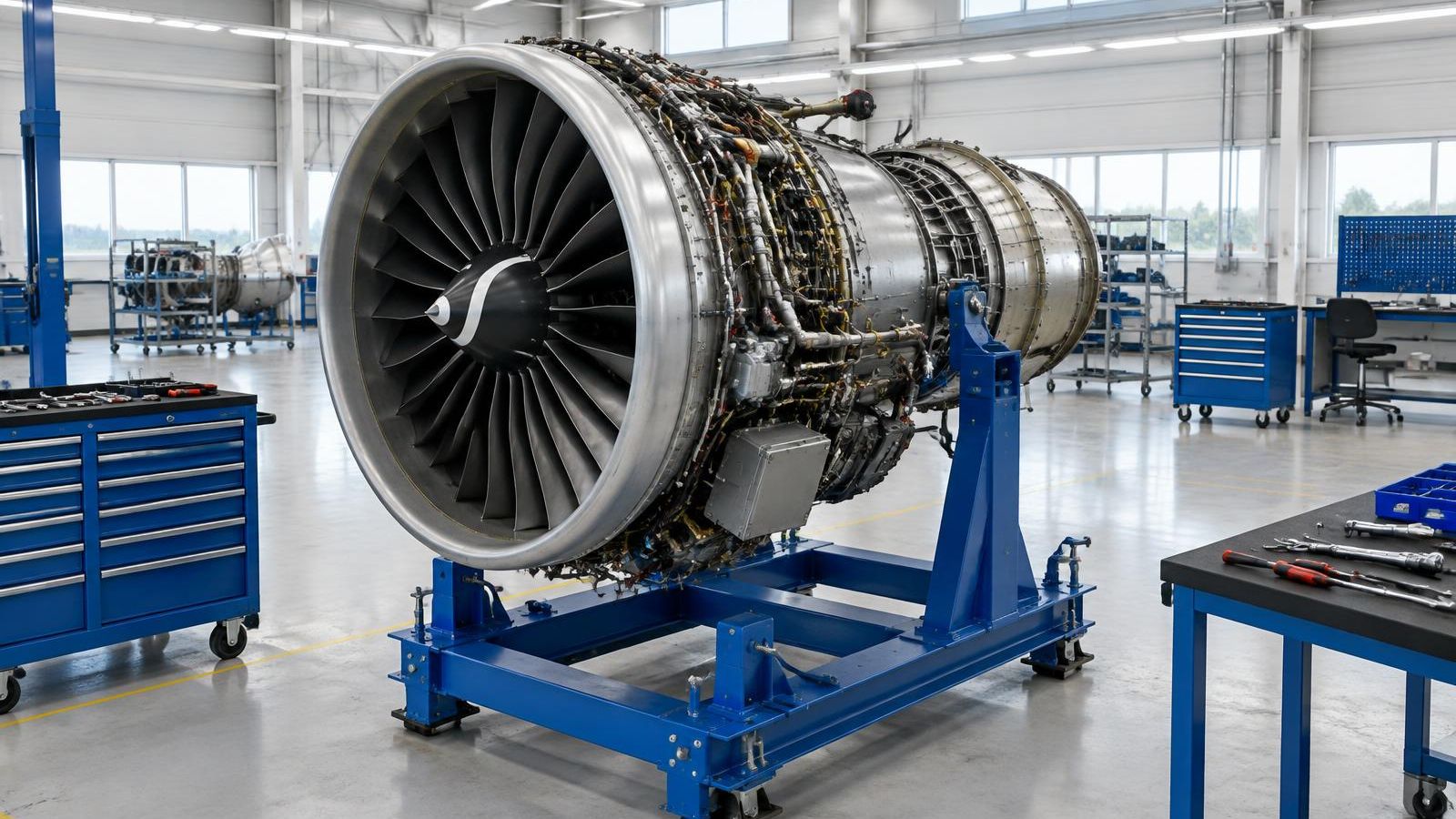
Behind every aeroplane, helicopter or drone there are engineers. They design the structure and systems, calculate performance, prepare and analyse tests, organise production and make sure the aircraft keeps complying with safety requirements throughout its life. The title "aeronautical engineer" therefore covers a wide range of jobs, with one thing in common: a master's-level education, five years after the end of secondary school.
One profession, many specialisms
CIDJ, the French youth information centre, identifies several profiles among engineers in the sector:
- the design office engineer, who designs airframe parts (fuselage, flight deck) or systems (radio, radar);
- the mechanical engineer, who works on wings, landing gear or engine nozzles;
- the aerodynamicist, a specialist in airflow around the aircraft and inside engines;
- the R&D structures engineer, who looks for lighter solutions that are cheaper to produce or easier to maintain;
- the test engineer, who defines test protocols and analyses results;
- the aircraft-level engineer, who has an overall view of the aircraft and coordinates the specialists.
Employers include aircraft manufacturers, engine makers and equipment suppliers, but also airlines, maintenance organisations, airports and the civil aviation administration. The space sector (launchers, satellites) also attracts some of these engineers over the course of their careers.
Routes into the profession
According to CIDJ, there are three main routes to becoming an aeronautical engineer in France:
- an engineering degree from a generalist school with an aeronautics option, or from a specialist school;
- a university master's degree in aeronautics and space;
- a mastère spécialisé (a one-year post-master's programme), on top of a first engineering or science degree.
The specialist schools mentioned by CIDJ include ISAE (including ISAE-SUPAERO), ENAC, ENSMA, Estaca, IPSA and the French Air Force Academy (École de l'air). Many generalist schools (Polytechnique, Centrale, Arts et Métiers, the INSA network and others) also offer aeronautics-oriented tracks.
Entry is most often after a scientific preparatory class, but there are also five-year schools recruiting straight after secondary school, and parallel admissions after a technical bachelor's (BUT), a university degree or another science qualification. Apprenticeship routes are also growing in many schools.
The ENAC engineer
The École nationale de l'aviation civile offers a three-year engineering programme focused on air transport, air navigation and aeronautical systems. CIDJ describes three possible statuses:
- civil servant, recruited by competitive exam, paid during training and destined to join the Directorate General for Civil Aviation (DGAC);
- civilian student, recruited by competitive exam after a preparatory class, with possible direct entry into the second year on application;
- apprentice, recruited on application after certain technical bachelor's degrees or a third year of a science or technology degree.
Checking the engineering title
In France, not every school is entitled to award the protected title of "ingénieur diplômé". The Commission des titres d'ingénieur (CTI), given this mission by law since 1934, evaluates engineering programmes and underpins their accreditation. Before enrolling, it is therefore wise to check that the chosen degree is among the accredited programmes, and to distinguish an engineering degree from a "bachelor" or "master" awarded by a private school.
Skills and prospects
The job requires solid foundations in mechanics, physics, materials, computing and electronics, as well as good English: programmes are often international and teams spread across several countries. A culture of safety and regulation (certification, airworthiness) is also central in a sector where every change must be justified and approved. CIDJ gives a starting salary of around EUR 3,000 gross per month. With experience, engineers take on more complex projects, larger budgets or teams.
Key points
- The profession spans many specialisms: design, structures, aerodynamics, testing, systems.
- The required level is a master's-level degree (engineering degree or master's), sometimes followed by a mastère spécialisé.
- ENAC trains engineers under three statuses: civil servant, civilian student or apprentice.
- The CTI accredits the programmes entitled to award the engineering title.
Sources
Related
Careers and training
Part-66 licence: how do you become an aircraft maintenance technician?
In Europe, certifying an aircraft's release to service after maintenance requires a Part-66 licence issued under EASA rules. Categories, training and experience explained.
27 October 2026
Careers and training
Becoming an airline pilot: from initial training to the ATPL
Integrated or modular training, a "frozen" ATPL, 1,500 flying hours: the path to the flight deck of an airliner is long, demanding and governed by the EU Aircrew Regulation. Here are the main steps.
1 October 2026
Careers and training
Becoming cabin crew: how to obtain the Cabin Crew Attestation
The Cabin Crew Attestation (CCA) is the European passport for flight attendants. Approved training, theory and practical exams, validity: how the system works in France.
25 September 2026