Manufacturers
Embraer E-Jets E2: the second generation of Brazilian regional jets
Embraer, a specialist in smaller commercial aircraft, is relying on its E2 family for the small single-aisle segment. Its positioning, technical promises and place against the A220.
By Rédaction··3 min read
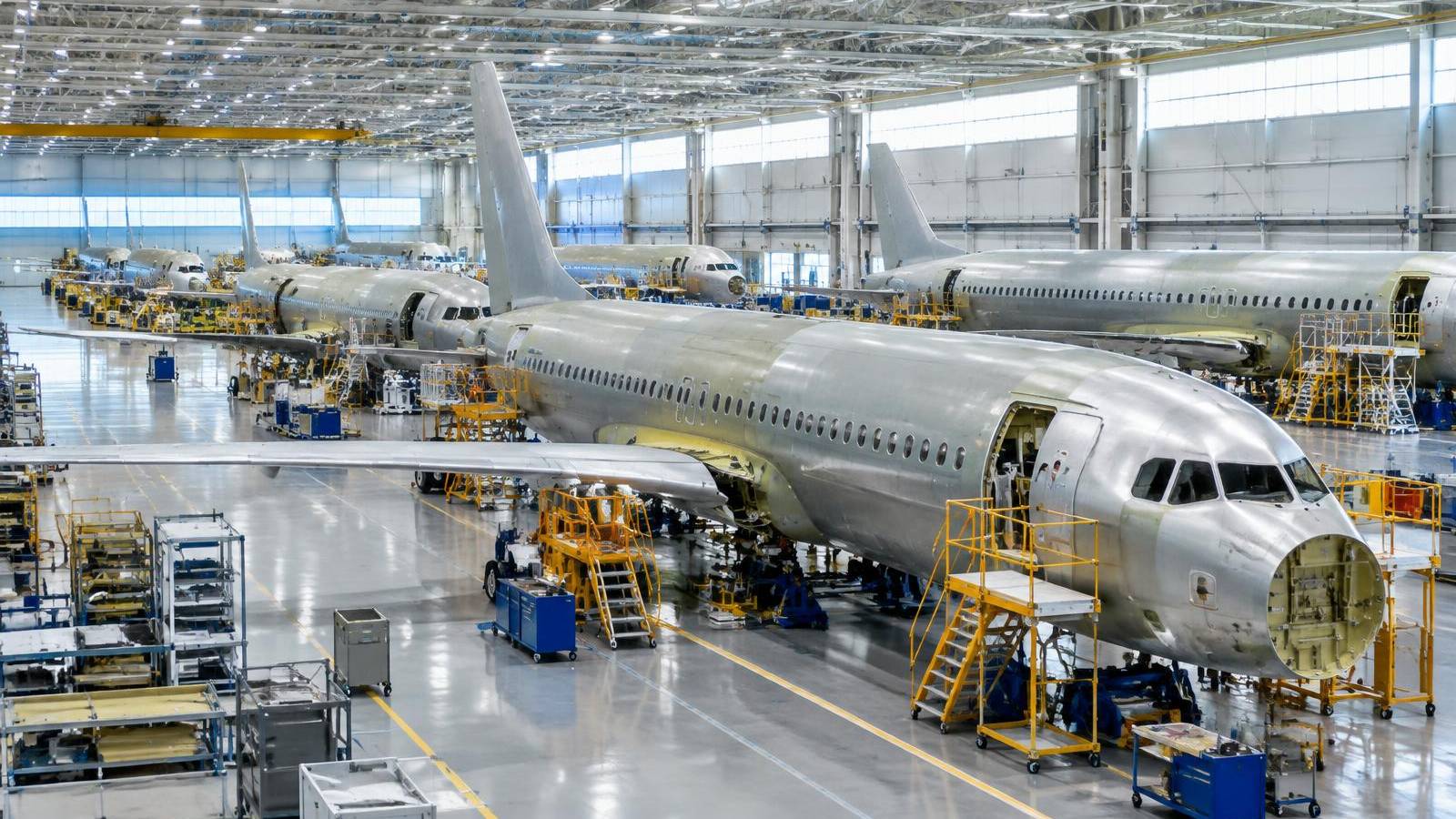
Embraer, the Brazilian manufacturer
Founded in Brazil, Embraer has carved out a place alongside the two giants, Airbus and Boeing, by concentrating on smaller aircraft. Its commercial range now comprises the ERJ regional jets, the first-generation E-Jets, the E-Jets E2 family and converted freighter versions, the E-Freighters.
The first-generation E-Jets established the manufacturer in the market for jets of roughly 70 to 120 seats, particularly with regional airlines in North America and Europe. The E2 family is the second generation.
A family of three aircraft
The E2 family comprises three models: the E175-E2, the E190-E2 and the E195-E2. The principle is similar to that of the A320neo: keeping the general architecture of the first generation, but with a new wing, new engines and modernised systems. The E2s are powered by Pratt & Whitney geared turbofans, the same technology chosen for the A220 and offered on the A320neo.
Embraer highlights several gains compared with first-generation E-Jets:
- 29% better fuel efficiency per seat;
- 19% lower fuel consumption;
- a noise footprint up to 68% smaller;
- compliance with ICAO Chapter 14 noise limits.
These are manufacturer figures, based on comparison with the previous generation.
A cabin with no middle seat
One of the most visible arguments for passengers is the cabin layout. As on the first generation, the E2 uses a 2-2 configuration, with no middle seat in economy. Embraer also cites 90% more baggage capacity than the first generation, a wider aisle and standard HEPA filters that capture 99.7% of airborne particles down to 0.3 microns, with the cabin air fully renewed at least 20 times an hour.
A range suited to the segment
Embraer highlights a range of 3,000 nautical miles and stresses that almost all missions flown by aircraft with fewer than 150 seats fall within that envelope. The manufacturer is thus targeting the zone where the most common single-aisles, designed for 150 to 240 passengers, are often oversized.
Embraer also points out that the E2 now flies on six continents. Operators cited on its website include the South American group LATAM.
An economically tricky segment
The market for aircraft of 100 to 150 seats is known to be difficult. A smaller aircraft carries fewer passengers to cover fixed costs that do not fall proportionally, such as those linked to the flight crew or to some charges. To be competitive, it must therefore compensate with lower fuel burn and maintenance costs. This is the whole challenge for new-generation aircraft such as the E2: making profitable the routes or time slots that large single-aisles serve poorly.
Against the A220
The E195-E2's main direct competitor is the Airbus A220, positioned in a neighbouring segment. The two aircraft compete in the same fleet renewal campaigns, especially at airlines still flying older-generation aircraft of 100 to 150 seats.
The arguments differ: Airbus stresses integration into its range and the A220-300's ability to seat up to 160, while Embraer emphasises the efficiency of its 2-2 cabin, its long specialisation in this segment and its support network.
A mixed-fleet strategy
In its market outlook, Embraer argues that mixed fleets, combining small and large single-aisles, strengthen airlines' resilience and flexibility. In other words, rather than flying a single aircraft type, an airline can assign a smaller aircraft to thinner routes or off-peak times and keep the large single-aisles for the busiest routes. It is precisely within this logic that the E2 seeks a place in airline fleets, alongside the A320 and 737 families.
Sources
Related
Manufacturers
Airbus A220: from Bombardier's C Series to the Airbus range
Designed in Quebec by Bombardier, the aircraft joined the Airbus range in 2018 as the A220. It covers the 100-to-160-seat segment, between regional aircraft and the A320 family.
26 October 2026
Manufacturers
ATR 42 and ATR 72: the regional turboprops designed in Toulouse
A joint venture between Airbus and Leonardo, ATR has established itself in the market for propeller-driven regional aircraft. Why the turboprop still makes sense on short routes, and how the ATR 42 and ATR 72 differ.
19 October 2026
Manufacturers
Airbus A350: the composite long-haul jet explained
In service since 2015, the A350 is Airbus's latest-generation widebody. Composite materials, a dedicated engine and two fuselage lengths: the technical choices that define the programme.
17 October 2026