Defence
Eurofighter Typhoon: Europe's major combat aircraft programme
Developed by the United Kingdom, Germany, Italy and Spain, the Eurofighter Typhoon first flew in 1994. More than 580 have been delivered. A look back at a four-nation model of cooperation.
By Rédaction··3 min read
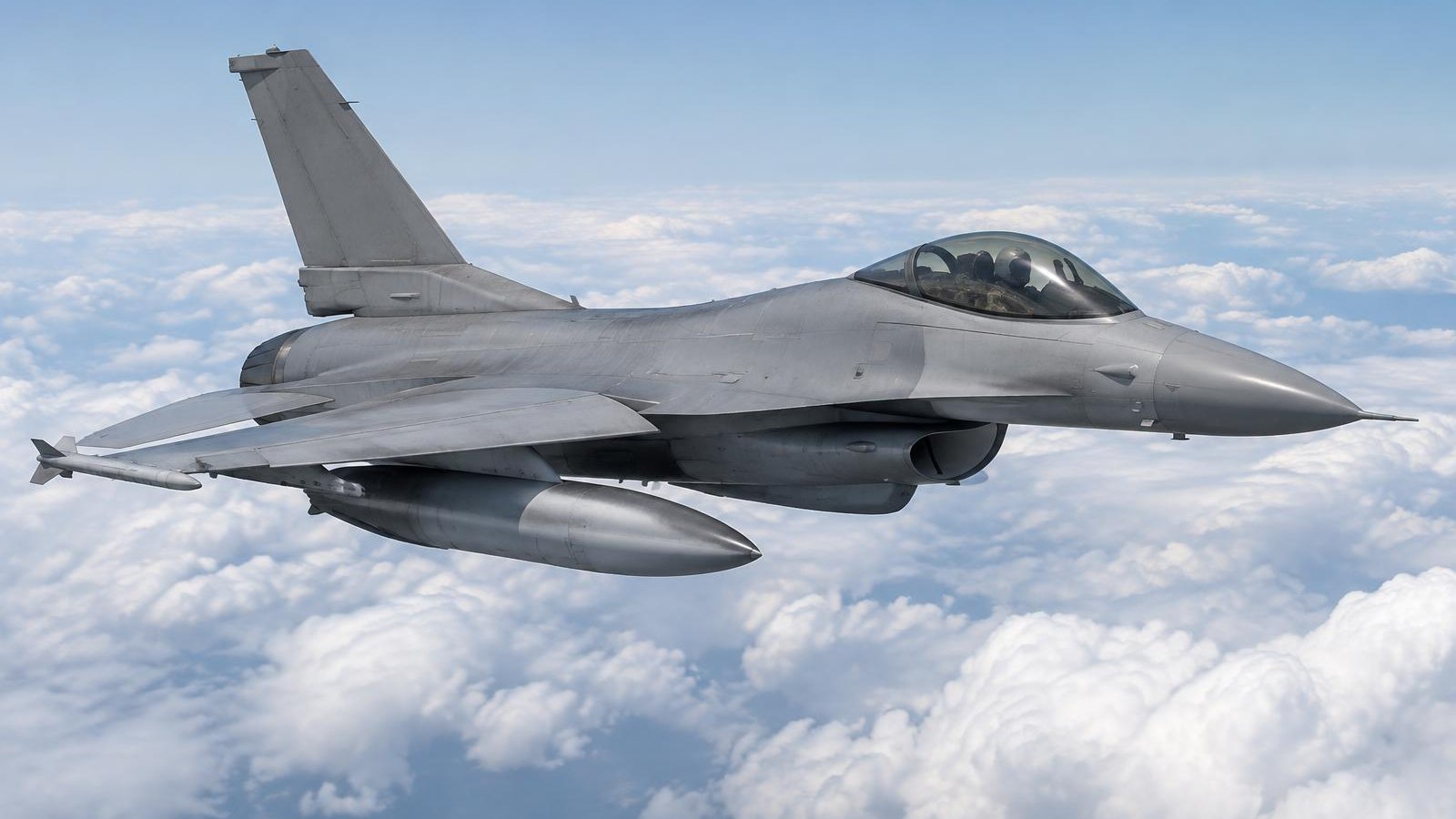
Four nations working together
The Eurofighter Typhoon is a combat aircraft developed jointly by four European countries: the United Kingdom, Germany, Italy and Spain. Its industrial consortium, Eurofighter Jagdflugzeug GmbH, brings together three major groups: BAE Systems, Leonardo and Airbus Defence and Space. On its website the consortium describes the aircraft as Europe's largest military programme.
The programme took shape in the 1980s, from a European project in which France initially took part. Paris withdrew in 1985 to develop the Rafale, notably because of different requirements such as the ability to operate from an aircraft carrier. The other four countries carried on together.
First flight in 1994
The first flight took place on 27 March 1994 at DASA's site in Manching, Germany. At the controls of the DA1 prototype was the company's chief test pilot, Peter Weger. This first prototype flew with Rolls-Royce Spey engines rather than the EJ200 engines later fitted to production aircraft, and it operated within a deliberately restricted flight envelope limiting speed and bank angle.
DA1 remained in service until 2005 to support development. It is now on display at the Flugwerft Schleißheim museum near Munich. In 2024, marking thirty years since that flight, the consortium said it aimed to keep the aircraft operationally effective for another thirty to forty years.
A distinctive design
The Eurofighter is recognisable by its aerodynamic layout: a delta wing combined with canards, small moving surfaces at the front of the fuselage. This configuration, shared with other European aircraft of the same generation including the Rafale, favours manoeuvrability. The aircraft is powered by two EJ200 engines produced by the Eurojet consortium.
Originally designed with a strong emphasis on air superiority, the Eurofighter has seen its capabilities extended through successive batches, known as tranches, so that it can also carry out ground attack missions. It is often described as a "swing-role" aircraft, able to switch from one mission to another.
More than 580 aircraft delivered, nine operating countries
According to the consortium, more than 580 Eurofighters have been delivered to date. The aircraft equips the air forces of the four partner nations and five export customers: Austria, Saudi Arabia, Oman, Kuwait and Qatar, making nine operating countries in all.
Day to day, the aircraft carries out air policing missions in particular, which involve intercepting and identifying aircraft that are not following the rules of the air or not responding to controllers. These missions are flown in each operating country, but also under NATO arrangements on behalf of allies that do not have their own combat aircraft.
Like other large defence programmes, the Eurofighter relies on a NATO agency, NETMA, which manages the programme on behalf of the partner states, working with the industrial consortium.
A model of cooperation
The Eurofighter illustrates a different approach from the one taken for the Rafale: where France favoured a national industrial base, four countries chose to share development costs and production. Each partner has its own final assembly line, which spreads industrial activity between the countries, at the cost of a more complex organisation.
This model has influenced thinking about the next generation. Germany and Spain are taking part with France in the FCAS programme, while the United Kingdom and Italy have committed to another next-generation programme with Japan.
Key points
Thirty years after its first flight, the Eurofighter Typhoon remains one of the pillars of combat aviation in Europe. It demonstrates both the advantages of multinational cooperation, in terms of cost sharing and production volume, and its complexity.
Sources
Related
Defence
Rafale: the history and principles of an "omnirole" combat aircraft
Designed in the 1980s to replace several aircraft types at once, the Rafale equips the French Air and Space Force and the French Navy. A look at a programme that evolves through successive "standards".
14 October 2026
Defence
A400M Atlas: Europe's military transport aircraft explained
Able to fly between continents and then land on a rough strip, the A400M Atlas has become a central tool of European military airlift. Its characteristics, missions and multinational organisation.
3 October 2026
Defence
A330 MRTT Phénix: a tanker that doubles as a transport aircraft
Derived from an airliner, the A330 MRTT refuels combat aircraft in flight, carries troops and can become a flying hospital. In France it is called Phénix; in Europe it also equips a pooled multinational fleet.
27 September 2026