General aviation
Gliding: how to learn and obtain the SPL sailplane licence
With no engine, a glider uses the energy of the atmosphere to stay aloft for hours. First solo at 14, licence at 16: here is how gliding training works.
By Rédaction··3 min read
Flying without an engine
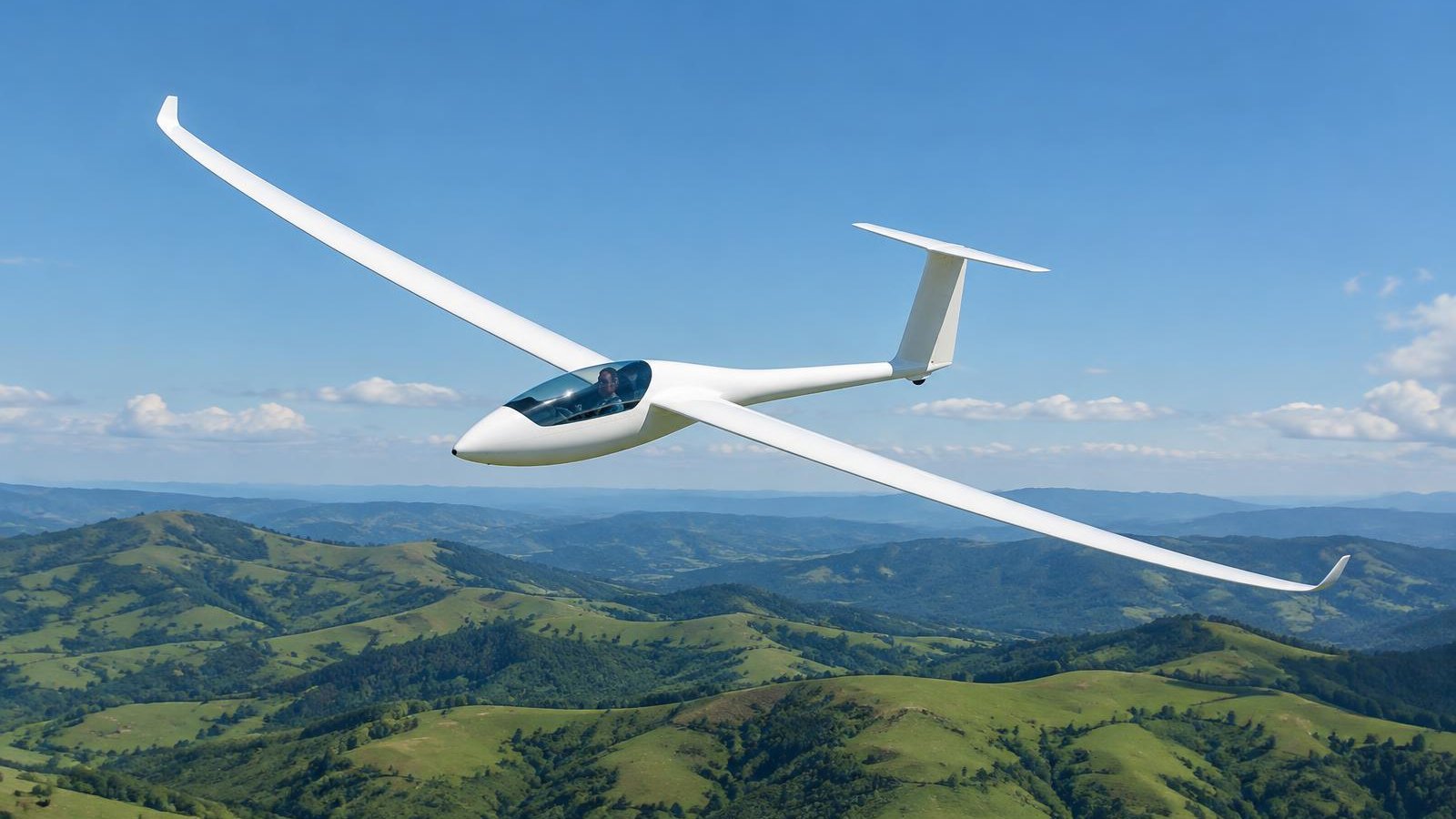
A glider, or sailplane, is an aircraft designed to fly without propulsion, or using an engine only as an auxiliary in the case of motor gliders. Once airborne, it is constantly descending relative to the surrounding air. To extend the flight, and even gain height, the pilot looks for areas where the air is rising faster than the glider is sinking.
Three main phenomena are used:
- thermals, columns of warm air rising above ground heated by the sun;
- ridge lift, which uses wind deflected upwards by high ground;
- wave, an undulating motion of the air mass that forms downwind of certain mountains and can carry gliders to high altitude.
By combining these sources of lift, an experienced pilot can cover several hundred kilometres in a day.
An activity organised around clubs
In France gliding is overseen by the French Gliding Federation (FFVP), headquartered at Château-Arnoux-Saint-Auban aerodrome in the Alpes-de-Haute-Provence. According to federation figures compiled by the DGAC for 2022, the discipline had:
- 157 clubs and 13,020 members;
- 1,813 gliders and motor gliders;
- 218 tow planes and 52 winches;
- nearly 222,000 flight hours over the year.
Club life is at the heart of the activity. Gliding is a collective pursuit: a flying day requires a tow pilot or winch operator, helpers on the ground to hold the wing level at take-off, and instructors.
How does a glider take off?
With no engine, a glider has to be launched. The most common methods are aerotow, in which an aeroplane pulls the glider on a cable up to the desired height, and winch launch, in which a cable wound in rapidly by a ground winch propels the glider upwards. Motor gliders can take off under their own power. European rules set a minimum number of training launches for each method used.
The SPL licence
Since the European reform that took effect in 2020, the glider pilot licence has been the SPL (Sailplane Pilot Licence), defined by Part-SFCL, introduced into Regulation (EU) 2018/1976 by Implementing Regulation (EU) 2020/358, and brought together by EASA in a dedicated Sailplane Rule Book. Its main requirements are:
- students may make their first solo flight from the age of 14, under an instructor's supervision;
- the licence may be issued from the age of 16;
- training includes at least 15 hours of flight instruction, of which 10 hours dual and 2 hours supervised solo, along with 45 launches and landings;
- applicants must complete a cross-country flight, either solo over at least 50 km or dual over at least 100 km.
The pilot must hold a valid medical certificate. To keep their privileges, they must show recent activity: within the last 24 months, at least 5 hours of flight time, including 15 launches and two training flights with an instructor, or a proficiency check with an examiner. To carry a passenger, they must have made at least three launches as pilot-in-command in the preceding 90 days.
Where to start
The French sports ministry encourages newcomers to try gliding at a club near home, for example with a trial flight. Training then follows the rhythm of flying days, often at weekends and during summer courses. Gliding has a reputation as an excellent school of airmanship: with no engine to correct a mistake, it forces pilots to anticipate, watch the sky and develop a detailed understanding of meteorology.
Sources
Related
General aviation
Microlights in France: six classes of aircraft and a licence with no minimum hours
Paramotor, weight-shift, three-axis, gyroplane, balloon or ultralight helicopter: the French ULM category covers six families of aircraft. An overview of a popular activity in France and the steps to becoming a pilot.
24 September 2026
General aviation
Flying clubs, the FFA and the BIA: gateways to leisure aviation in France
Nearly 600 flying clubs and more than 40,000 members: in France, learning to fly usually means joining an association. For younger people, the aeronautical initiation certificate (BIA) offers a first step.
15 September 2026
General aviation
PPL or LAPL: which private pilot licence should you choose?
To fly a light aeroplane for leisure in Europe, two licences coexist: the well-known PPL(A) and the lighter LAPL(A). Minimum age, flight hours, privileges: what sets them apart.
1 September 2026