Airports
Paris-CDG and Orly: two Paris airports with complementary roles
Nearly 107 million passengers passed through Paris-Charles de Gaulle and Paris-Orly in 2025. Two airports run by the same group, but with very different profiles and constraints.
By Rédaction··3 min read
A two-hub airport system
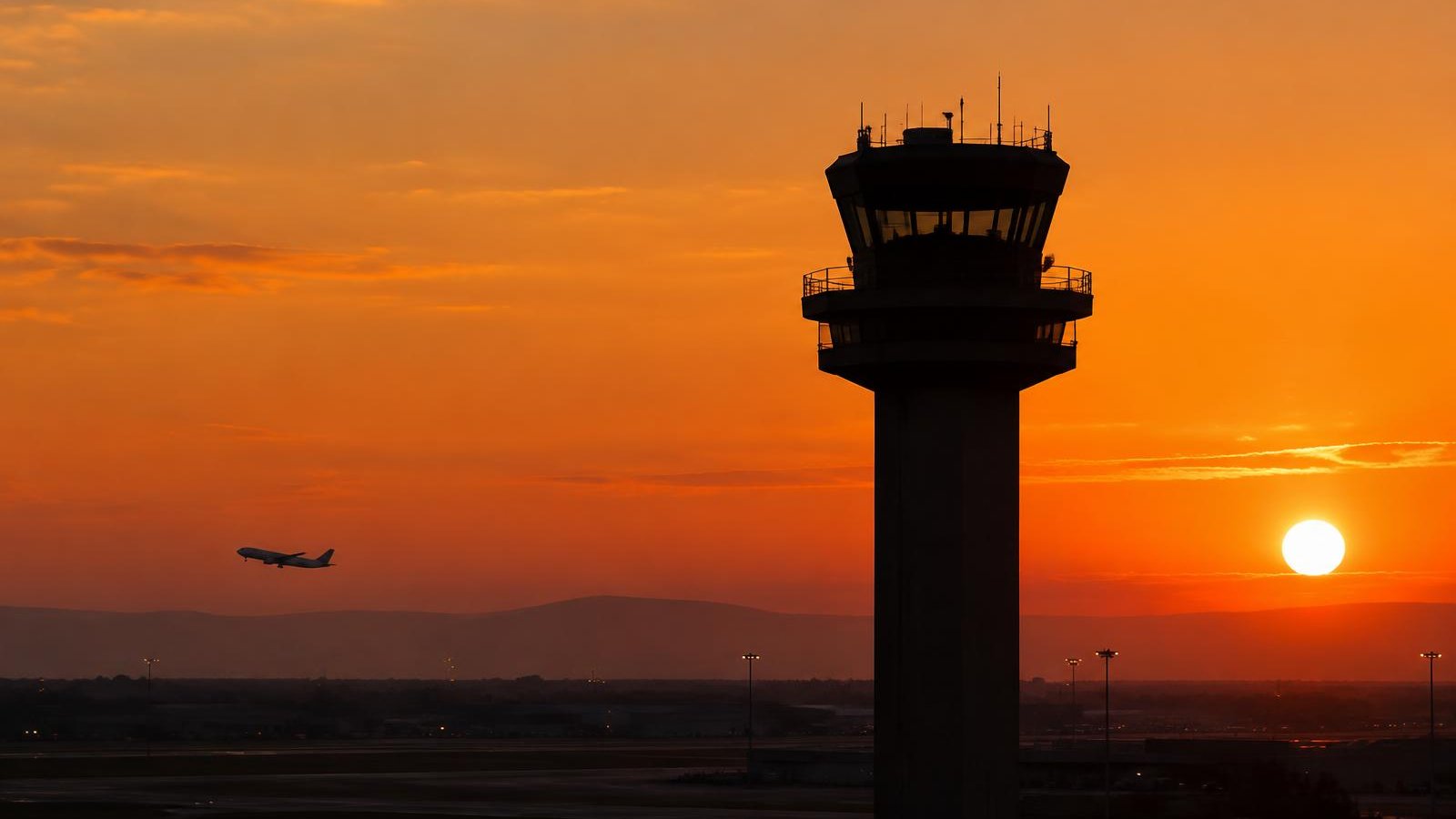
The Paris region relies on two large passenger airports operated by Aéroports de Paris (Groupe ADP) under the Paris Aéroport brand: Paris-Charles de Gaulle to the north, in Roissy-en-France and neighbouring municipalities, and Paris-Orly to the south. The group also runs Paris-Le Bourget, dedicated to business aviation and known for its air show.
According to figures published by Aéroports de Paris on 15 January 2026, the two airports together handled 106,958,316 passengers in 2025, up 3.4% year on year. That total represents 99% of the 2019 level, the reference year before the pandemic.
Paris-CDG, the connecting hub
Paris-Charles de Gaulle, opened in 1974, is France's main airport and one of the largest in Europe. It handled 72,029,407 passengers in 2025, up 2.5% on 2024, but still at 94.6% of its 2019 traffic.
Its distinctive feature is its role as a hub: a large share of passengers simply transit through it, connecting between two flights. The airport is Air France's main base and hosts most long-haul services from Paris. It has four runways arranged in two pairs of parallel runways, a layout that largely separates take-off and landing flows.
Orly, the close-to-home airport
Paris-Orly, older and closer to central Paris, has a different focus: mainly domestic flights, Europe, the Mediterranean basin and France's overseas territories. In 2025 it handled 34,928,909 passengers, 5.5% more than in 2024 and almost 110% of its 2019 level. Orly is therefore among the airports that have exceeded their pre-crisis traffic.
This growth takes place within a strict framework. Orly is surrounded by densely built-up areas and is subject to two long-standing constraints:
- a curfew between 11.30 pm and 6 am, in force since 1968;
- a cap of 250,000 slots a year, set in 1994.
In 2024 the French transport ministry put out to public consultation a draft of additional restrictions on night flights and the noisiest aircraft, including a gradual phase-out of some aircraft by 2029. Measures of this kind follow a regulated procedure that includes an opinion from the airport noise authority (Acnusa) and notification to the European Commission.
Changing access
Surface access is one of the differences between the two airports. Paris-CDG is linked to Paris by the RER B suburban line and has a TGV station connecting it to the high-speed rail network, which strengthens its role as an intermodal node. Orly, long served by the Orlyval automated shuttle connecting with the RER, has been reachable since June 2024 by metro line 14, extended to the airport. These links weigh on travellers' choice between the two airports, especially for short trips where access time matters a great deal.
Two coordinated airports
Both Paris-CDG and Orly are "coordinated" airports under European rules. An airline may only operate a flight there if it holds a slot allocated by the independent coordinator, COHOR. This system, together with Orly's cap, explains why access to these two airports remains highly sought after by airlines.
What the figures show
The 2025 results point to two different trajectories. Orly, driven by short- and medium-haul routes, is well above its 2019 level despite its cap. Paris-CDG, more exposed to long-haul traffic and international connections, is growing but has not yet returned to its pre-crisis level. The group's monthly traffic releases make it possible to follow how this develops. Published as regulatory announcements, they remain the reference for measuring, month after month, the respective weight of the two airports in French air traffic. For travellers, the choice between the two will continue to depend on destination, airline and ease of access.
Sources
Related
Airports
Airport security: what happens at the passenger screening checkpoint
Walk-through detectors, X-rays, body scanners, liquids limited to 100 ml: security screening is an unavoidable step before boarding. Here is how it works and which rules apply to cabin baggage.
22 October 2026
Airports
Air traffic control: how DSNA guides aircraft across French skies
Towers, approach units, en-route centres: behind every flight crossing France is a chain of controllers coordinated by DSNA. A look at an organisation that handled more than 3.3 million flights in 2024.
20 October 2026
Airports
Numbers, markings, lights: how to "read" an airport runway
Why is a runway called 09/27 or 26R? What do the green, red and blue lights seen at night mean? A short guide to the conventions that help pilots find their way around an aerodrome.
4 October 2026