How it works
Landing in fog: how ILS and Category III approaches work
When fog hides the runway, airliners can still land thanks to the ILS, a precision radio guidance system, and to automatic landing. Categories I, II and III explained.
By Rédaction··3 min read
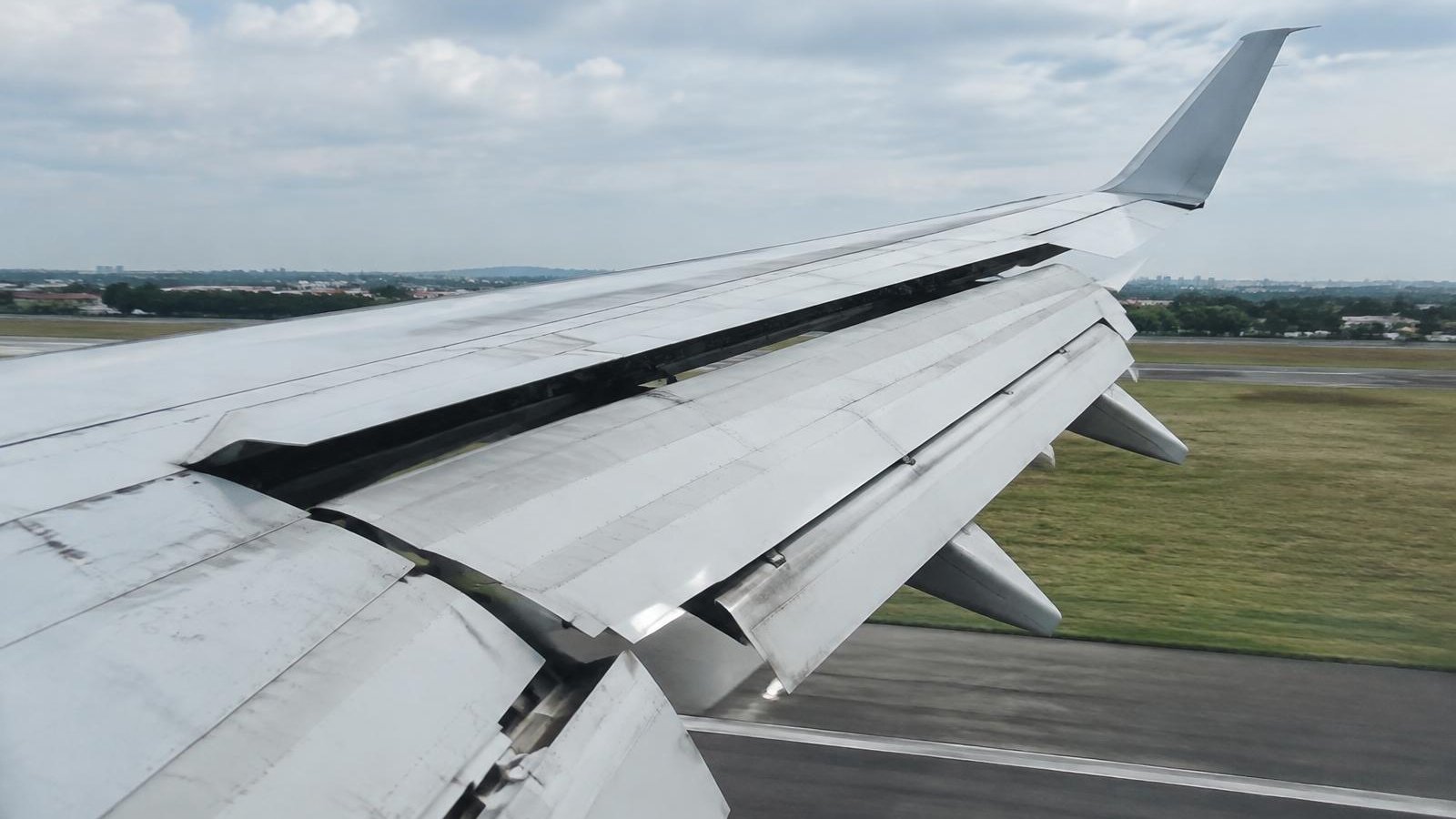
One winter morning, fog blankets the airport: you cannot see the end of the runway. Yet aircraft often keep landing. They owe this to a system designed decades ago and constantly refined: the ILS (Instrument Landing System), combined with specially qualified aircraft and crews.
Two radio beams to guide the aircraft
The ILS gives the pilot, or the autopilot, guidance in both dimensions of the approach:
- the localiser provides the horizontal centreline. Its aerials, placed beyond the far end of the runway, transmit two beams slightly to the left and right of the centreline. The aircraft is aligned when it receives both with equal strength;
- the glide path (or glide slope) provides the vertical profile. Its aerials, installed beside the runway, define a slope usually of 3 degrees, which brings the aircraft across the runway threshold at about 50 feet.
According to the FAA's Aeronautical Information Manual, the localiser transmits on one of 40 ILS channels between 108.10 and 111.95 MHz, and the glide path between 329.15 and 335.00 MHz. Course guidance is guaranteed within a defined volume, out to 18 nautical miles from the runway within 10 degrees either side of the centreline.
In the past, marker beacons under the approach path indicated the distance remaining, with the outer marker about 5 nautical miles from touchdown. Today they are often replaced by distance measuring equipment (DME).
The categories: how low without seeing
The crux of an approach in fog is the decision height: the point at which the pilot must see enough visual references to continue, or else go around. ILS approaches are classified into categories according to this height and to the runway visual range (RVR), measured by instruments along the runway. SKYbrary summarises the usual values:
- CAT I: decision height of 200 feet, RVR of at least 550 metres;
- CAT II: decision height not lower than 100 feet, RVR of at least 300 metres;
- CAT IIIA: decision height below 100 feet, RVR of at least 200 metres;
- CAT IIIB: decision height below 50 feet, RVR of at least 50 metres;
- CAT IIIC: no decision height and no minimum RVR.
Category IIIC is not used routinely, not least because an aircraft landing with no visibility at all would be unable to taxi to its stand.
Automatic landing
In Category III, the approach usually ends with an automatic landing (autoland). The autopilot follows the localiser and glide path, reduces thrust, flares just before touchdown, then keeps the aircraft on the centreline during the rollout using the localiser. The pilots monitor throughout and remain ready to abandon the approach.
This level of automation requires extensive redundancy: several computers, several receivers, radio altimeters and alerts able to flag the slightest anomaly.
A fully qualified chain
A high-performance ILS is not enough. To fly a Category II or III approach, the whole chain must be qualified:
- the aircraft, certified and maintained for this type of operation;
- the crew, trained and regularly checked in the simulator;
- the airline, approved by its oversight authority;
- the airport, equipped with suitable lighting and applying low visibility procedures.
These procedures protect in particular the sensitive areas around the aerials: an aircraft or vehicle coming too close could disturb the signal. That is why landing rates drop markedly in fog, even when flights are not cancelled.
Key points
- The ILS combines a centreline beam (localiser) and a slope beam (glide path), usually at 3 degrees.
- Categories I to III define how low an aircraft may descend without seeing the runway.
- In Category III, aircraft usually land automatically.
- Aircraft, crew, airline and airport must all be qualified, which reduces landing rates in fog.
Sources
Related
How it works
How an airplane flies: the four forces, simply explained
Lift, weight, thrust and drag: four forces are enough to describe how an aircraft flies. An explanation without unnecessary equations.
20 October 2026
How it works
Black boxes: what flight recorders really record
After an accident, recovering them is a priority. What do "black boxes" contain, how do they withstand impact and fire, and how does France's BEA extract their data? An explainer.
6 October 2026
How it works
Pressurisation: how do we breathe at 35,000 feet?
At cruising altitude the outside air is too thin to breathe normally. Pressurisation recreates in the cabin an atmosphere comparable to that of a medium-sized mountain. Here is how.
30 September 2026