How it works
Black boxes: what flight recorders really record
After an accident, recovering them is a priority. What do "black boxes" contain, how do they withstand impact and fire, and how does France's BEA extract their data? An explainer.
By Rédaction··3 min read
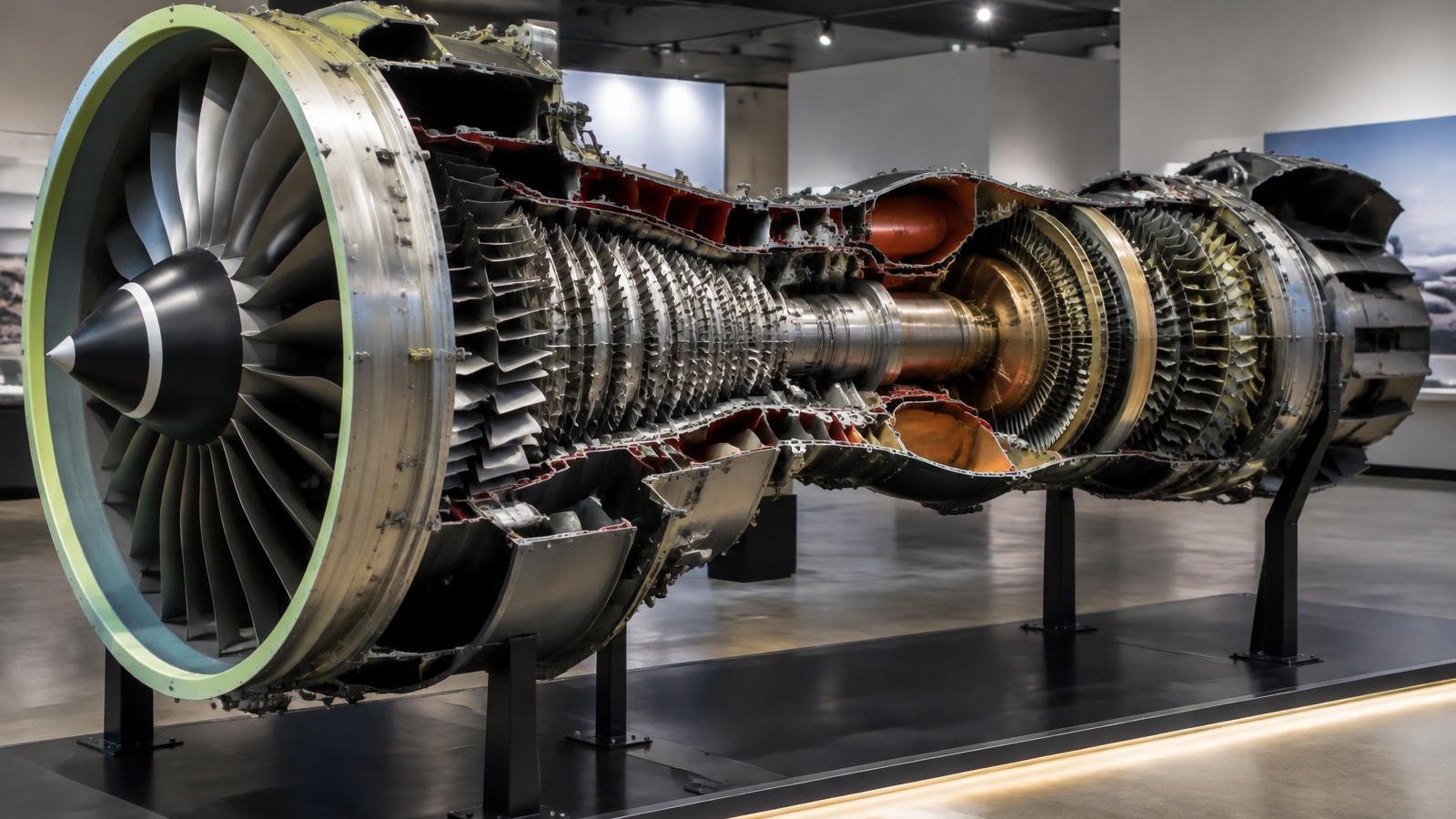
After every air accident, the same question comes up: have the "black boxes" been found? Behind the nickname are flight recorders, mandatory equipment on public transport aircraft, business jets and large helicopters. Contrary to what the name suggests, they are painted bright orange so they are easier to spot in wreckage. The BEA, France's civil aviation safety investigation authority, explains how they work.
Two recorders, two missions
There are two types of recorder:
- the CVR (cockpit voice recorder) captures the flight deck's sound environment: crew conversations, radio exchanges with air traffic control, alarms and noises. According to the BEA, it retains at least the last two hours, and most transport aircraft will soon carry CVRs with a capacity of at least 25 hours. The BEA notes that a CVR has four audio tracks;
- the FDR (flight data recorder) records flight parameters: speed, altitude, engine settings, autopilot status, control surface positions and so on. It covers more than 25 hours of flight, with anything from a few dozen to several thousand parameters recorded every second depending on the aircraft.
There are also combined recorders, CVFDRs, which bring both functions together and also record exchanges between the flight deck and the cabin, as well as datalink messages from air traffic control. Recent aircraft increasingly carry two combined recorders, one under the flight deck and one in the tail.
Built to survive
The part holding the data is housed in a protected module designed to withstand extreme conditions. The BEA cites the following requirements:
- an impact of more than 3,400 g;
- a fire at 1,100 °C for one hour, or at 260 °C for ten hours;
- immersion for 30 days at a depth of 6,000 metres.
The BEA stresses that the casings are often badly damaged on the outside, yet total or partial loss of data remains extremely rare. The technology has evolved: magnetic tape has given way to solid-state memory, which is more compact and can store more.
Finding a recorder underwater
When an aircraft comes down at sea, an underwater locator beacon attached to the protected module activates automatically on contact with water. According to the BEA, it emits a signal every second for 90 days, detectable on average at about 4 kilometres with specialised sonar receivers. International rules now also provide, for aircraft flying transoceanic routes, a separate acoustic beacon fixed to the fuselage to locate the wreckage more quickly.
How the BEA reads the data
The BEA's flight recorder and avionics systems laboratory can read every type of recorder used by French airlines and fitted to French-designed aircraft. The method depends on the equipment's condition:
- if the recorder is intact, it is connected to dedicated read-out benches;
- if the casing is damaged, investigators open the protected module to extract the data medium;
- in the most severe cases, the memory card is repaired, or each chip is desoldered and read individually, after which the raw file is rebuilt and decompressed.
Then comes the analysis. Acoustic specialists transcribe conversations, identify noises and alarms through spectral analysis and time-stamp them. Others process the flight parameters into graphs or three-dimensional animations. Cross-checked with evidence from the site, airline data and air traffic control records, this information gives an overall picture of how the event unfolded.
A prevention tool
Recorders are not there to apportion blame: a safety investigation aims to understand what happened and prevent it from happening again. Their data feed into safety recommendations addressed to authorities, manufacturers and operators.
Key points
- "Black boxes" are actually orange and comprise a voice recorder (CVR) and a flight data recorder (FDR).
- The protected module withstands 3,400 g, 1,100 °C for one hour and 30 days at a depth of 6,000 metres.
- An underwater beacon transmits for 90 days to help find them.
- The BEA can recover data even from severely damaged recorders.
Sources
Related
How it works
How an airplane flies: the four forces, simply explained
Lift, weight, thrust and drag: four forces are enough to describe how an aircraft flies. An explanation without unnecessary equations.
20 October 2026
How it works
Landing in fog: how ILS and Category III approaches work
When fog hides the runway, airliners can still land thanks to the ILS, a precision radio guidance system, and to automatic landing. Categories I, II and III explained.
11 October 2026
How it works
Pressurisation: how do we breathe at 35,000 feet?
At cruising altitude the outside air is too thin to breathe normally. Pressurisation recreates in the cabin an atmosphere comparable to that of a medium-sized mountain. Here is how.
30 September 2026